
It was shortly before 10:30PM on August 9, 2019. Prison guard Tova Noel left her desk to inspect every tier found within the special housing unit (SHU) of the Metropolitan Correctional Center (MCC) prison in New York City. This was the same prison and unit that housed the notorious sex offender Jeffrey Epstein. Epstein would be found dead in his cell at 6:33 AM the following day.
Noel had already called the prison control room to report that she had counted 73 inmates on her unit. The prison control room affirmed her count was correct.
”G/v 10:30PM” the officer wrote on the master count sheet which meant ‘good verbal count at 10:30PM’. SHU is coded as ‘ZA’ in the count sheet below.
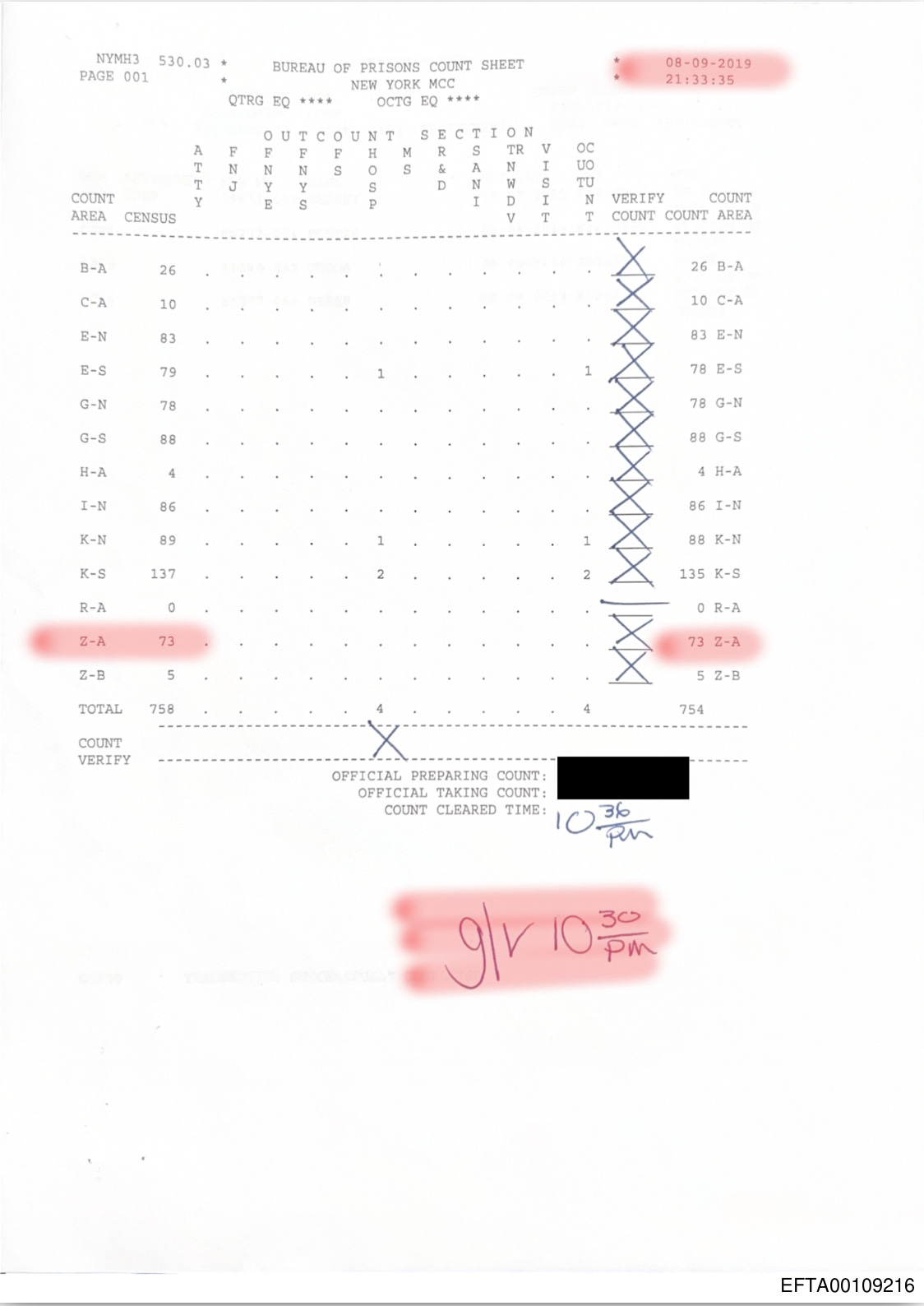
The control room completed and finalized the count at 10:36PM but there was a problem.
The count was wrong.
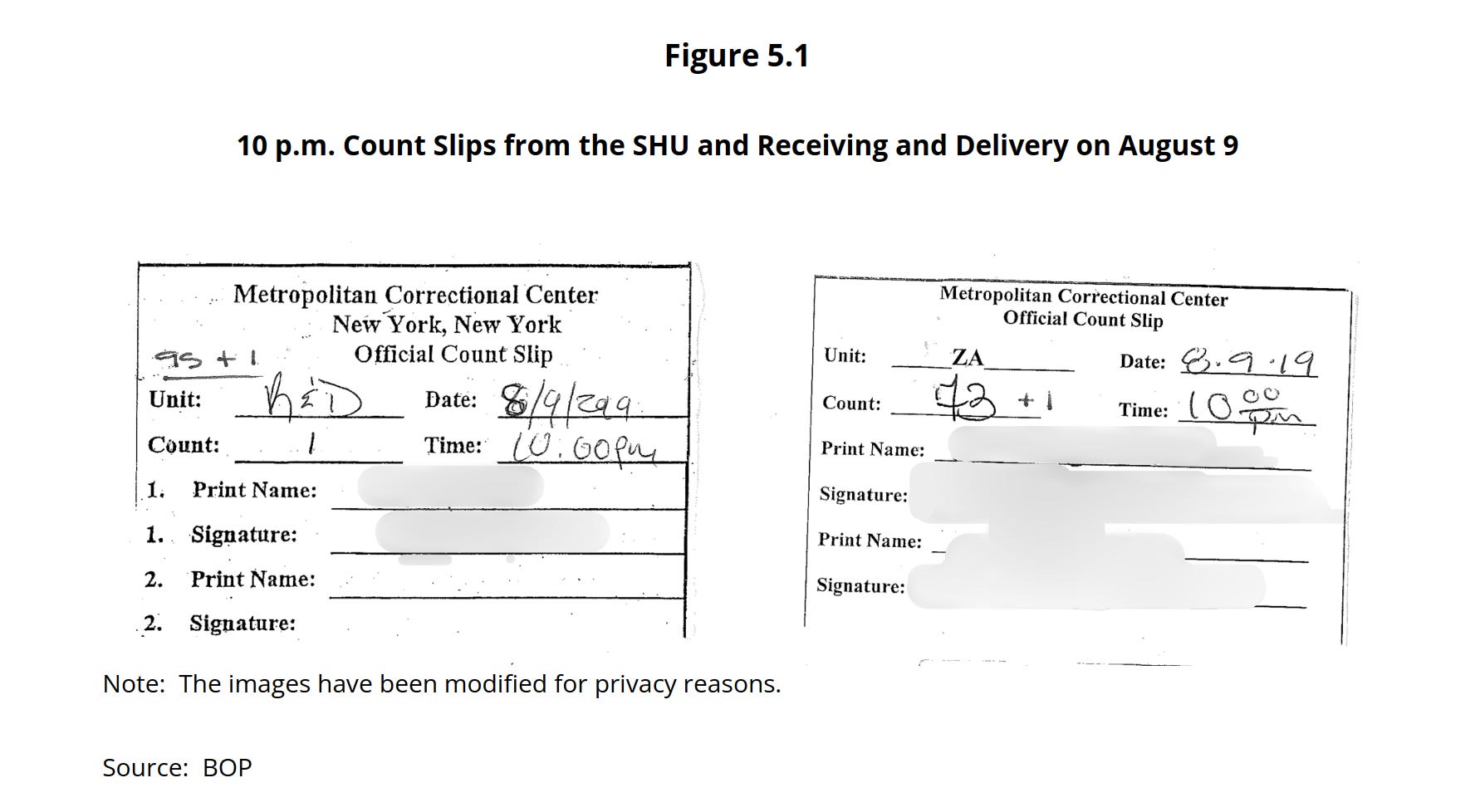
Earlier in the day, another inmate had been sent from SHU to another unit called ‘Receiving and Discharge’ or ‘R&D’. It was one of the oddities noted in the Office of the Inspector General (OIG) report on the death of Jeffrey Epstein. Despite control receiving a count slip saying that there was one inmate in R&D the master count sheet said there were none. On top of that, both of the 10PM count slips officers used to keep track of how many inmates were on their units had bizarre markings on them. The SHU count slip, marked with as unit ‘ZA’, showed the incorrect count of ‘'73’ along with a marking of ‘+1’. The R&D slip showed the correct count of ‘1’ along with the note ‘9S+1’.
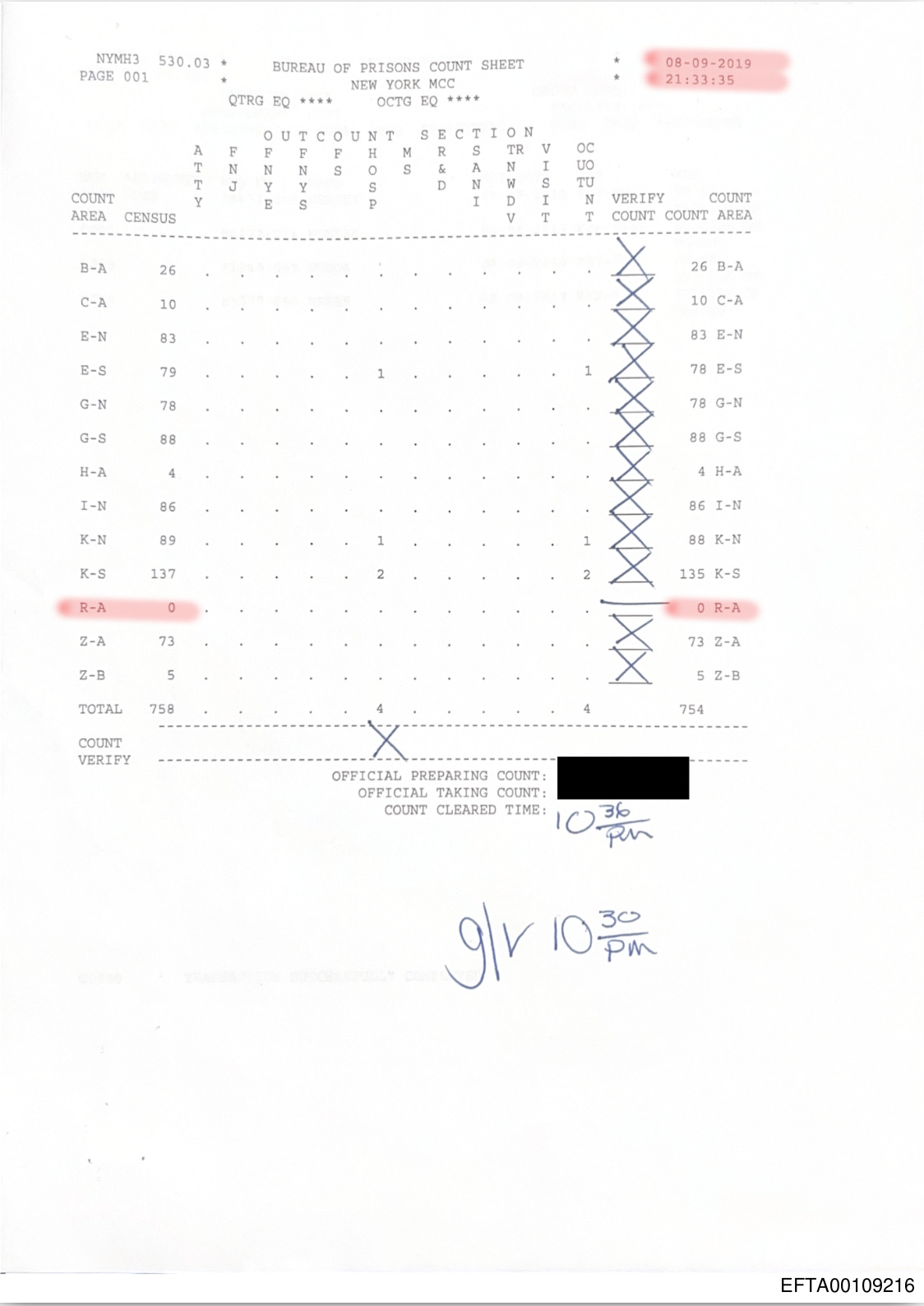
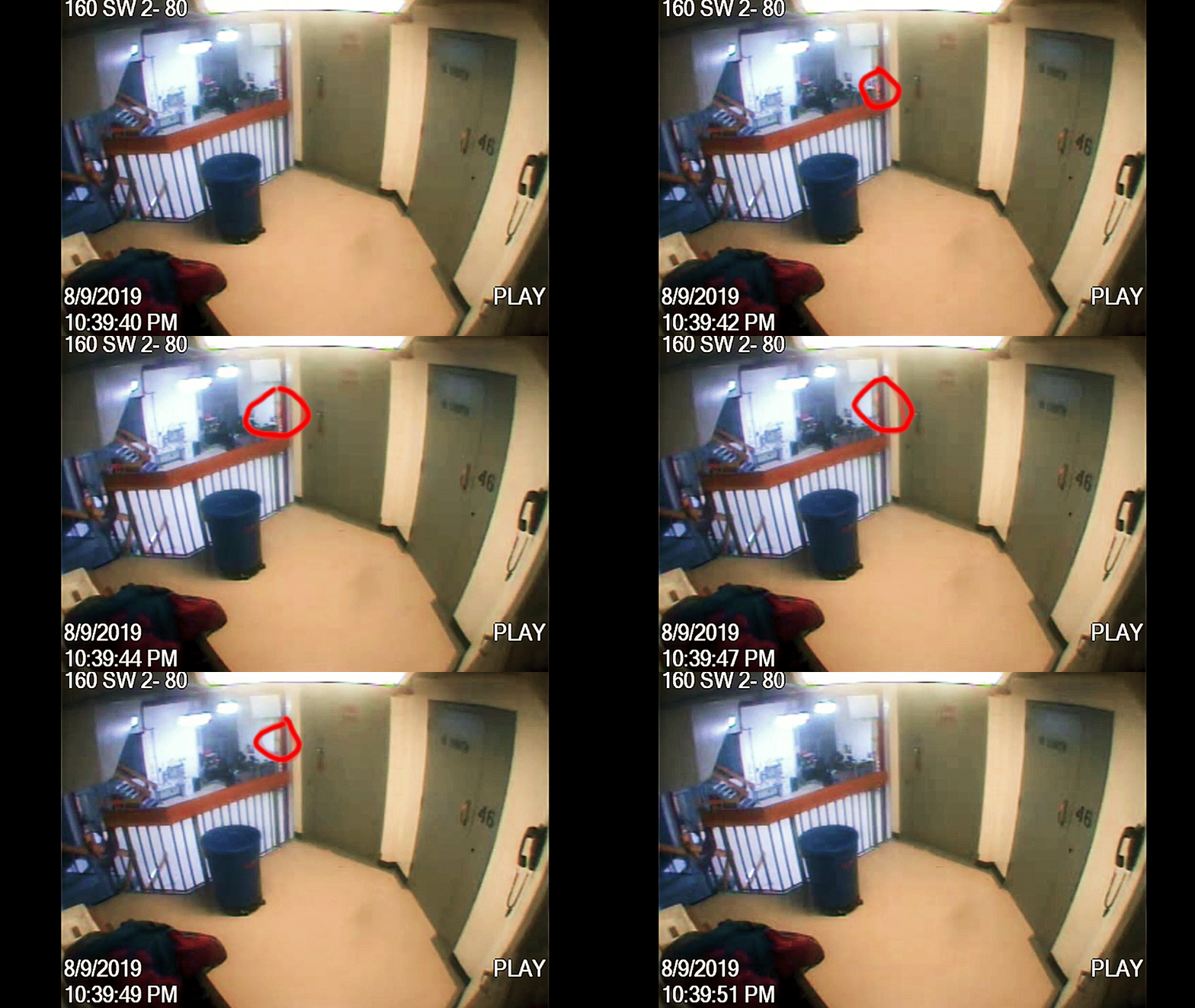
A bit more than three minutes after this incorrect count was cleared the infamous orange flash was seen on surveillance footage of the SHU heading towards the tier that contained Epstein’s cell. FBI analysis concluded it could have been an inmate. OIG analysis concluded it must have been someone who was carrying linens instead of an inmate because the prison was on lockdown.
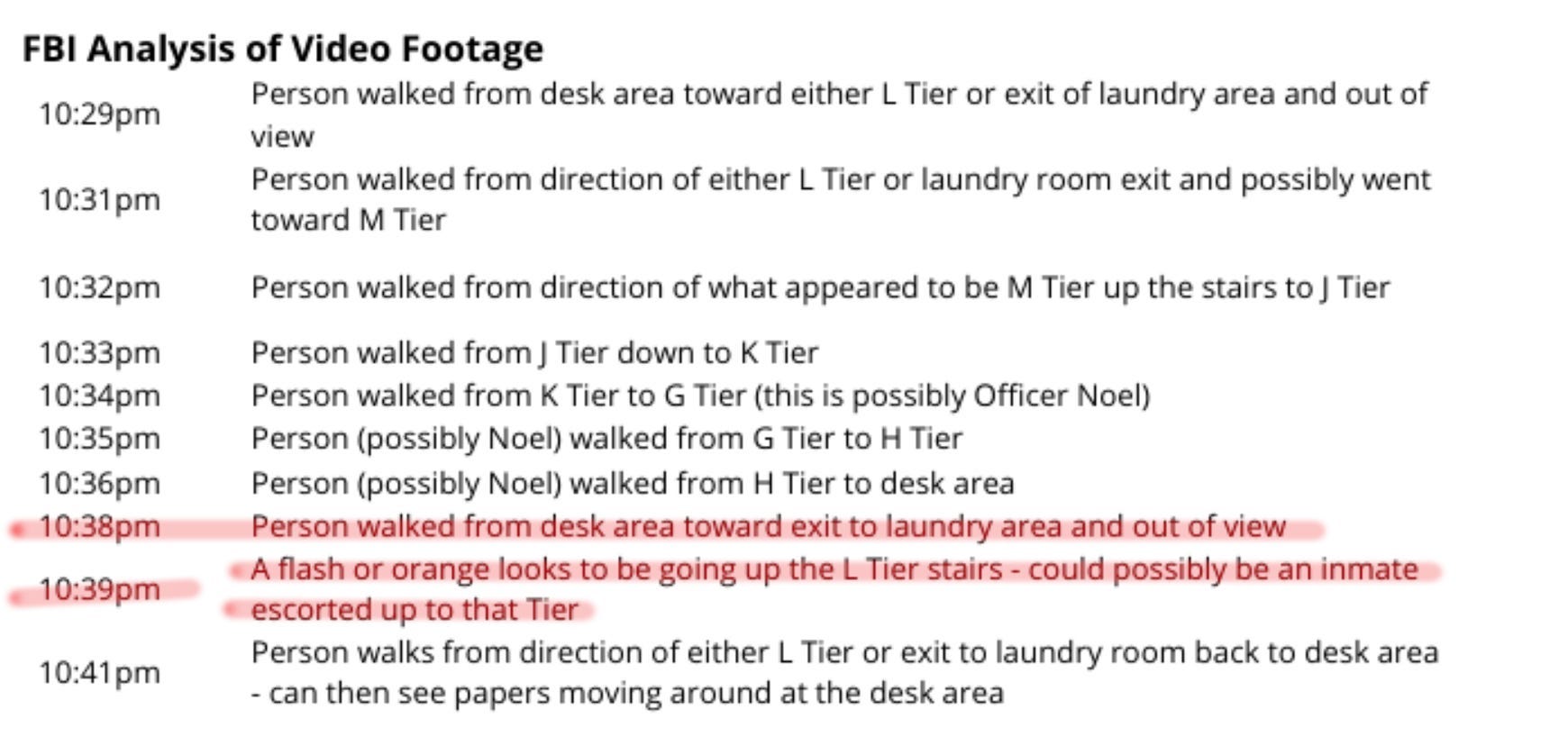
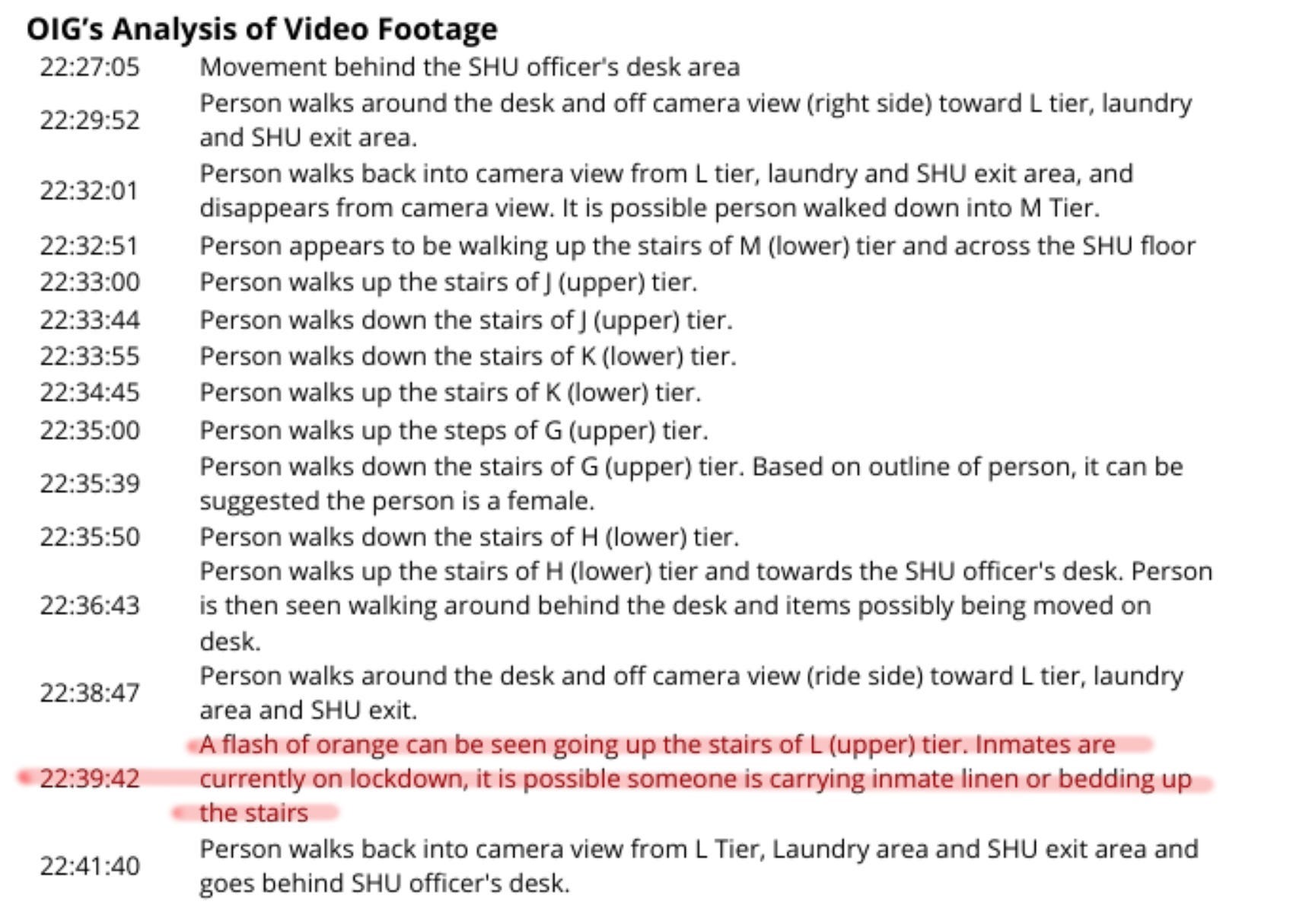
I already wrote another piece about how the officer identified as Senior Officer Specialist 6 in the OIG report told investigators that the 9S+1 markings they made on their count slip was meant to show that an inmate was expected to return from the R&D unit to SHU and this is a continuation of that story.
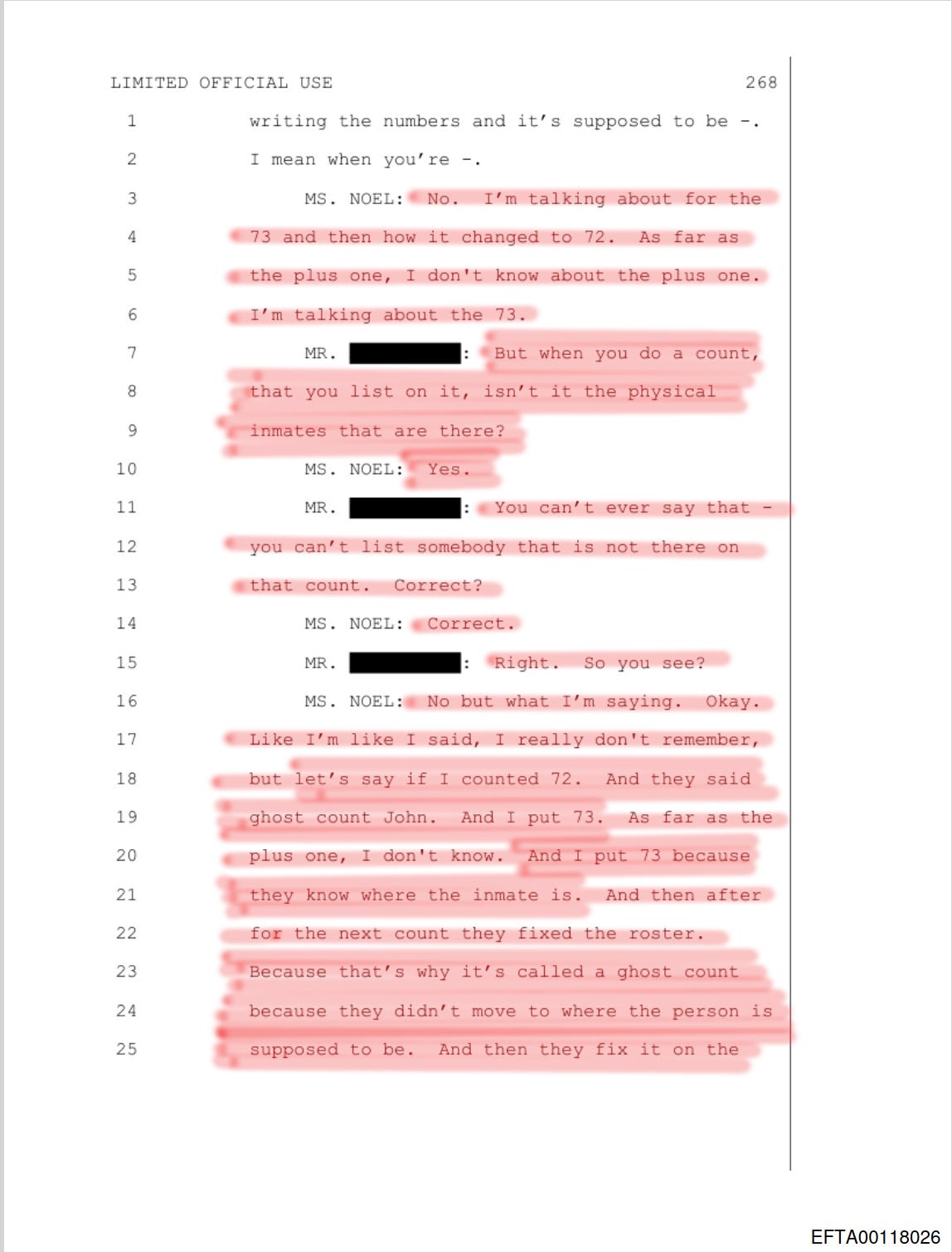
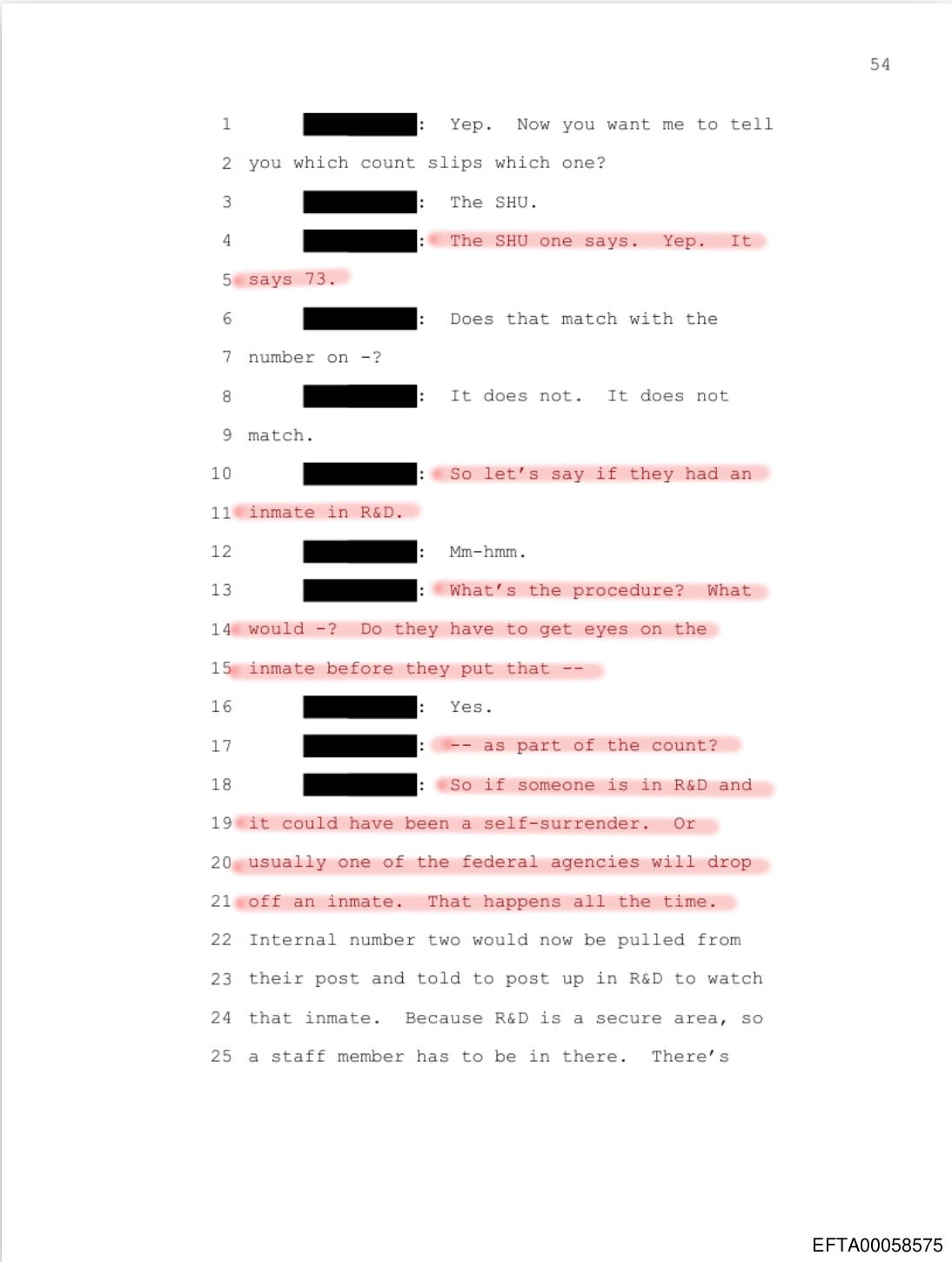
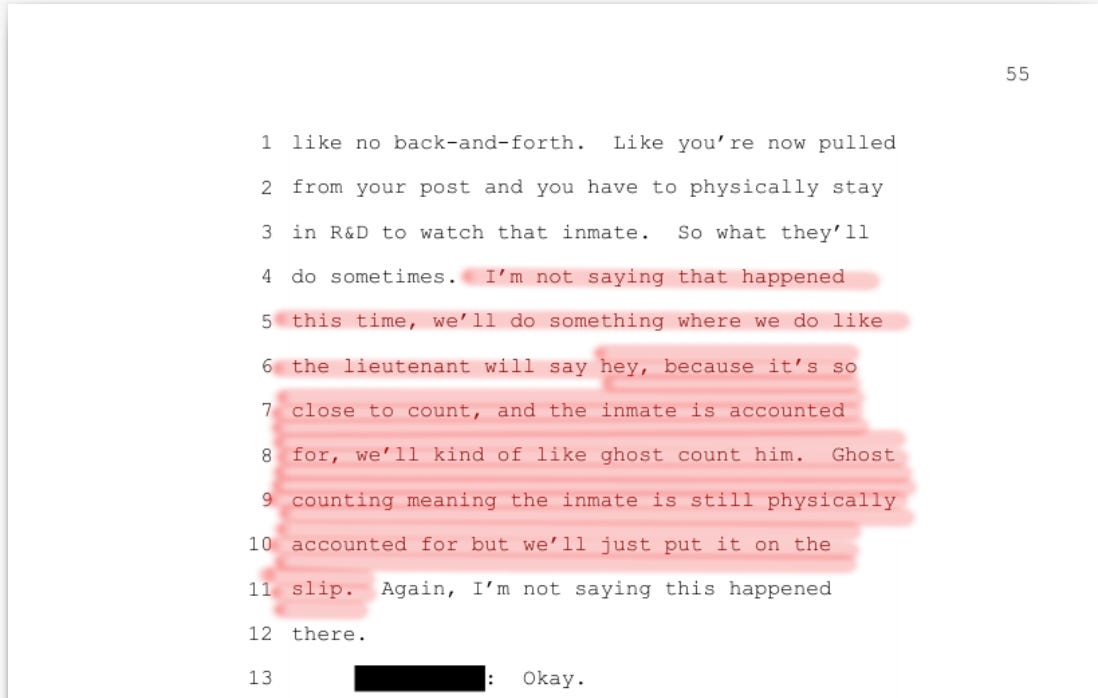
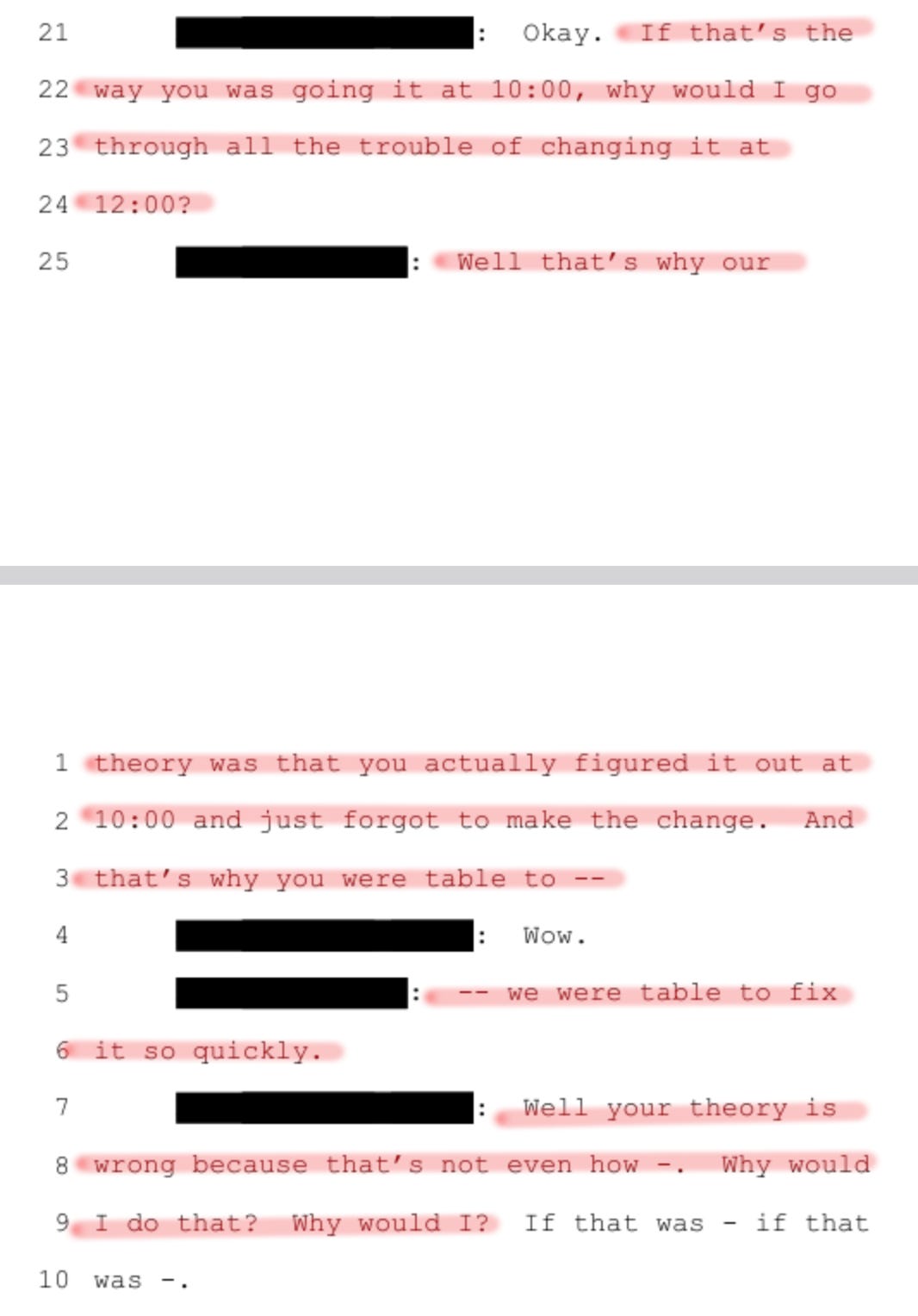
Tova Noel was interviewed by the OIG in June of 2021 as a part of her agreement to avoid prosecution for falsifying federal records. Investigators grilled Noel about the 10PM count, confident that she had not done it. Noel was adamant that she had. When asked by investigators to explain how both she and the control room could have counted 73 inmates in SHU when only 72 were present Noel said a ‘ghost count’ was the only explanation she could think of.
Noel told investigators that a ‘ghost count’ occurs when officers are told to include inmates on their counts that are not physically present on the unit. Prison counts are supposed to only include inmates that are physically on the unit but exceptions are made when control or a prison lieutenant knows where an inmate physically is and directs the officer to include them on the count anyway. Noel told investigators that these are done when an inmate isn’t moved to the correct unit on the master count sheet and control decides to correct for that later. The inmates are not physically there but they are included in the count anyway as if a ghost was being counted.
To put it another way. Noel told investigators that she was instructed to count an inmate that was not physically there as if they were physically there. That’s why she counted ‘73’ instead of ‘72’.
You can see the transcripts from the interview below.
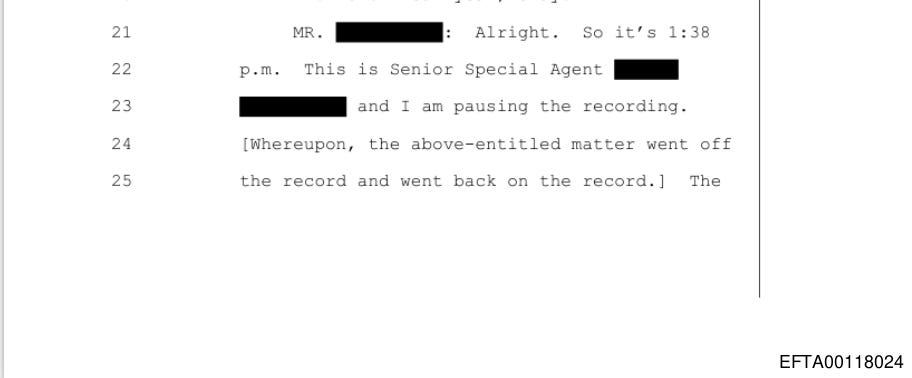
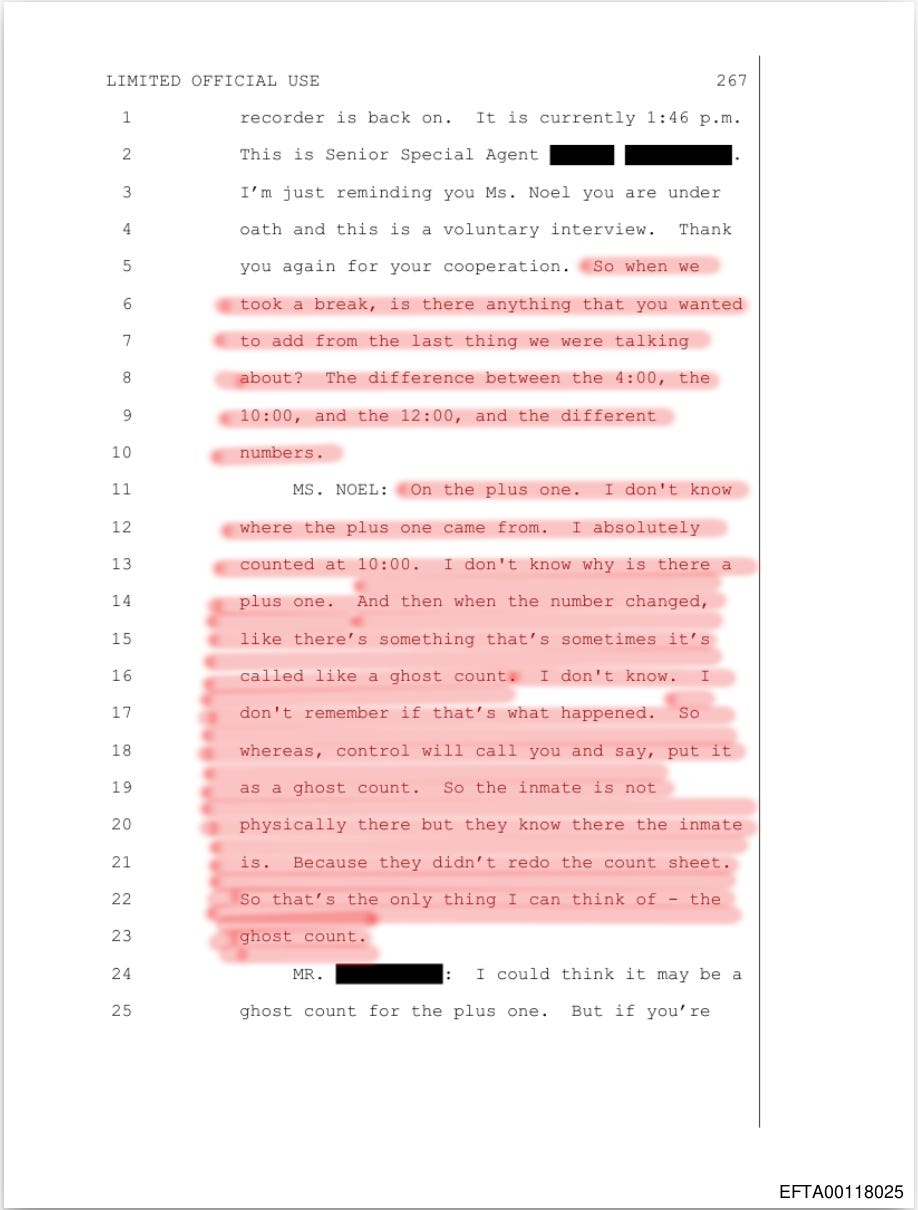

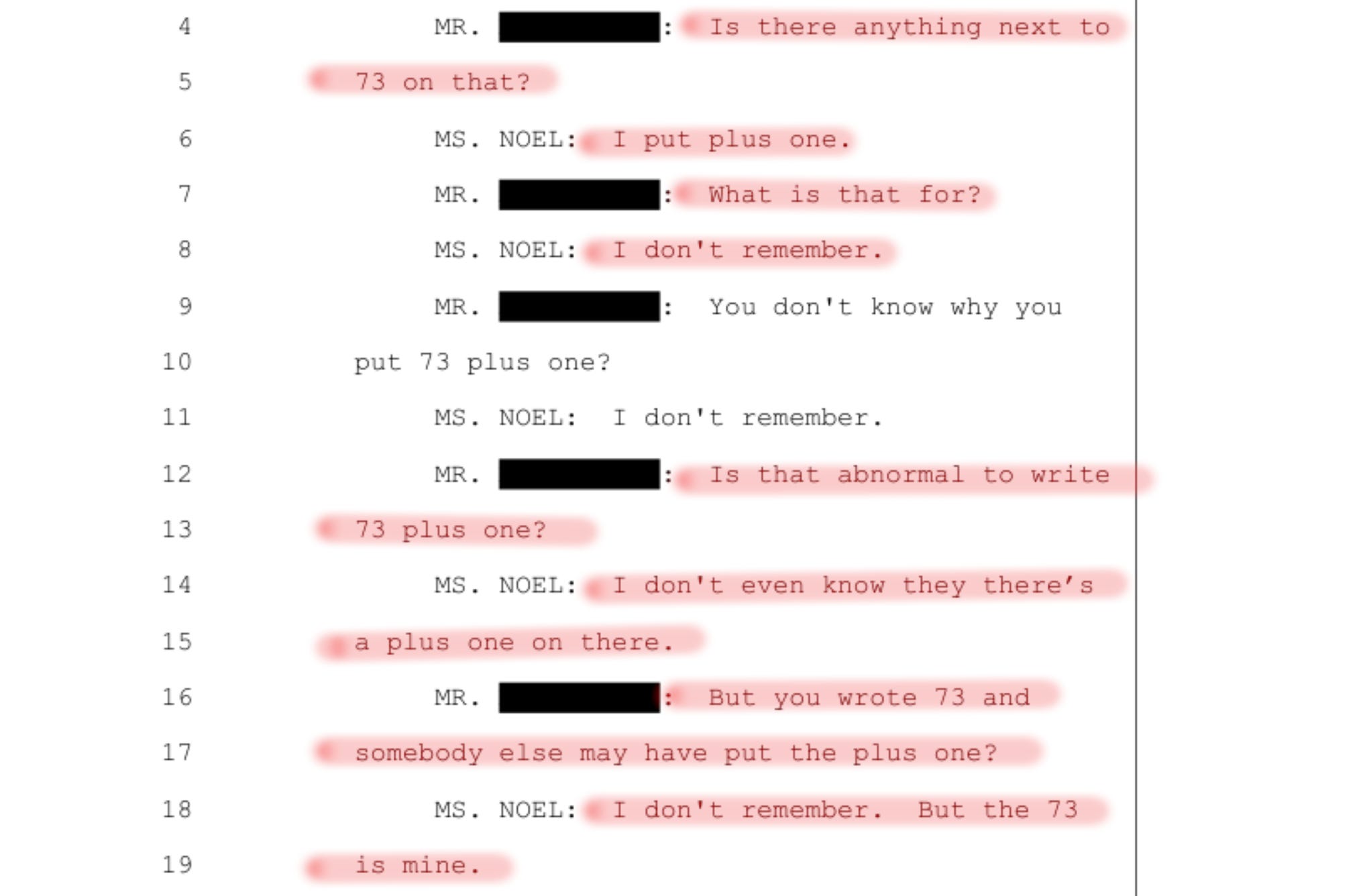
It should be noted that earlier in the interview Noel told investigators that she was the officer who wrote the mysterious ‘+1’ marking on the 10PM count slip. However, shortly after saying this she tells investigators that she can’t remember if she actually did write ‘+1’ on the count slip and claimed to have no idea why it would be put on there.
At first blush, the explanation given by Noel might not make much sense. Why would the control room instruct someone to ghost count an inmate to a unit when they’re not there? Wouldn’t it make more sense to have the counts done correctly on each unit and keep the inmates counted on the units they were posted to at the time?
This is where things get interesting.
According to other staff members who were interviewed by the OIG, ghost counting inmates didn’t mean you would include an inmate on a count to a unit you didn’t expect that inmate to arrive at.
On the contrary.
According to other officers you would ghost count other inmates into units with the full expectation that they would be placed within that unit some time later.
Take for instance the explanation of how ghost counts work given by the officer referred to as Senior Officer Specialist 1 in the OIG report.
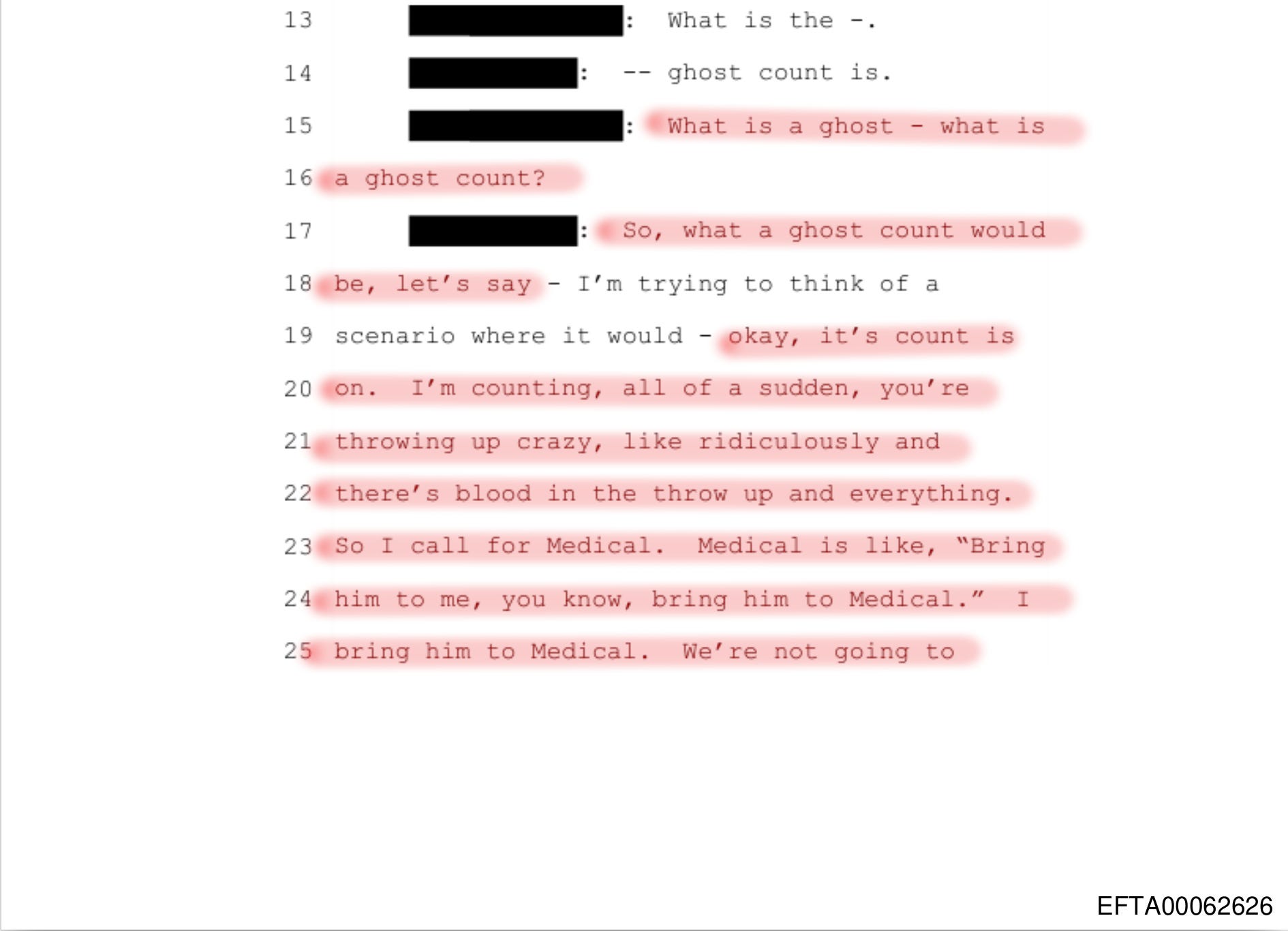
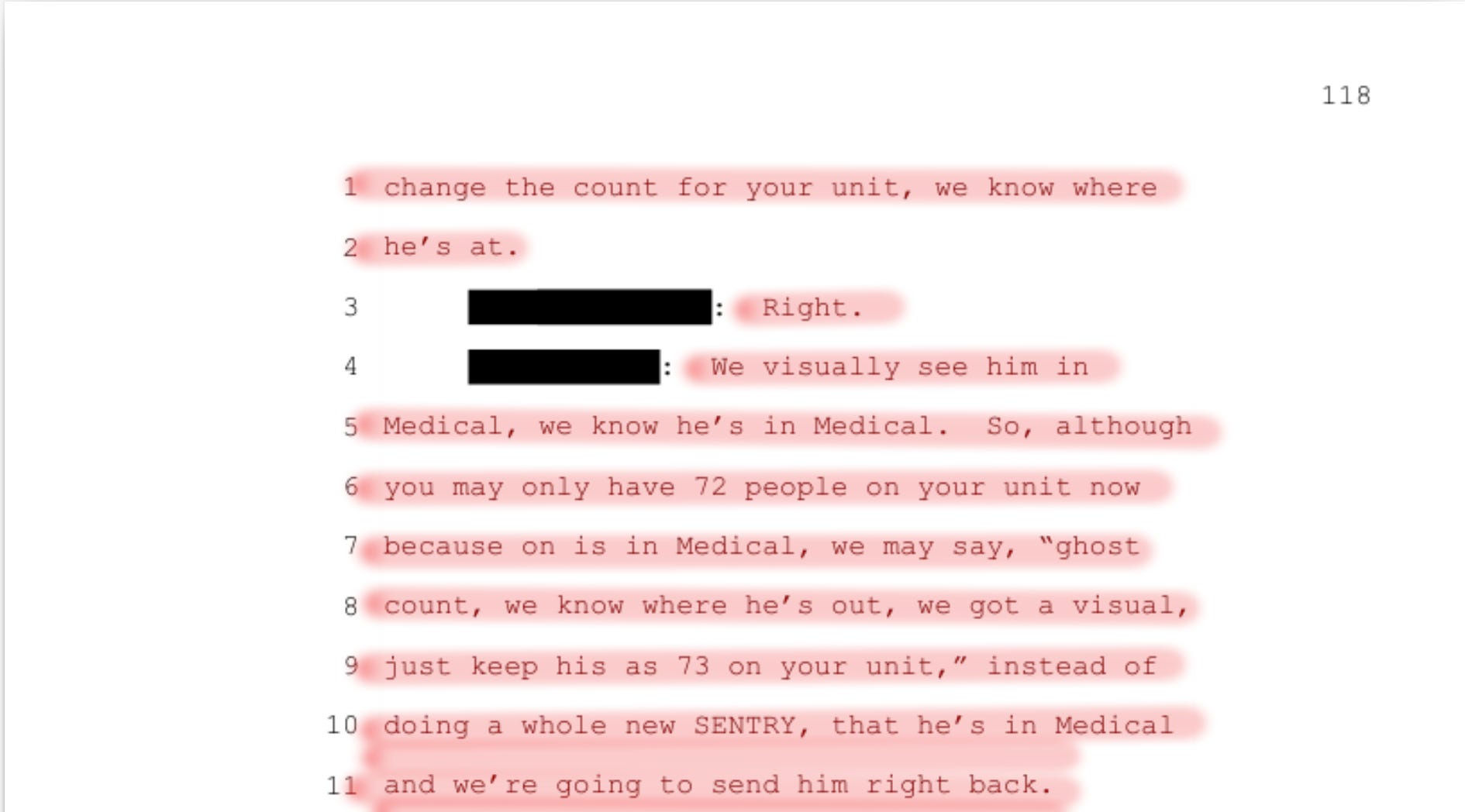
During his July 2021 interview with investigators Senior Officer Specialist 1 explained how ghost counts work by telling investigators to imagine an inmate who was bleeding and vomiting on his unit. If the guard calls the prison medical service and is instructed to have that inmate sent to the clinic the count would be reduced by one because the inmate is no longer there.
To have this inmate correctly counted would involve various inconvenient steps which could prove troublesome if a count was expected to be completed soon. Not only would this guard need to redo the count for his unit, but control would have to update their master count sheet to show that this inmate was in medical and reduce the guard’s unit count by one.
Instead of going through all of those steps which could delay the completion of the count, the guard might be instructed to ‘ghost count’ that inmate with the expectation the inmate would later return. This would make his count incorrect temporarily but it would be corrected once the inmate was sent back.
Another officer identified as the Acting Evening Watch Activities Lieutenant in the OIG report also believed a ghost count could explain how the 10PM count rose from 72 to 73 like Tova Noel.
In her interview with the OIG in June of 2021 Acting Evening Watch Activities Lieutenant used an example where inmates would arrive at the prison close to count time. If the unit assignments for these inmates is known ahead of time they could be ghost counted into those units. This saves time and allows staff to focus on more important work. In other words, even though those inmates would not be at those units at the time the count is taken they would be later.
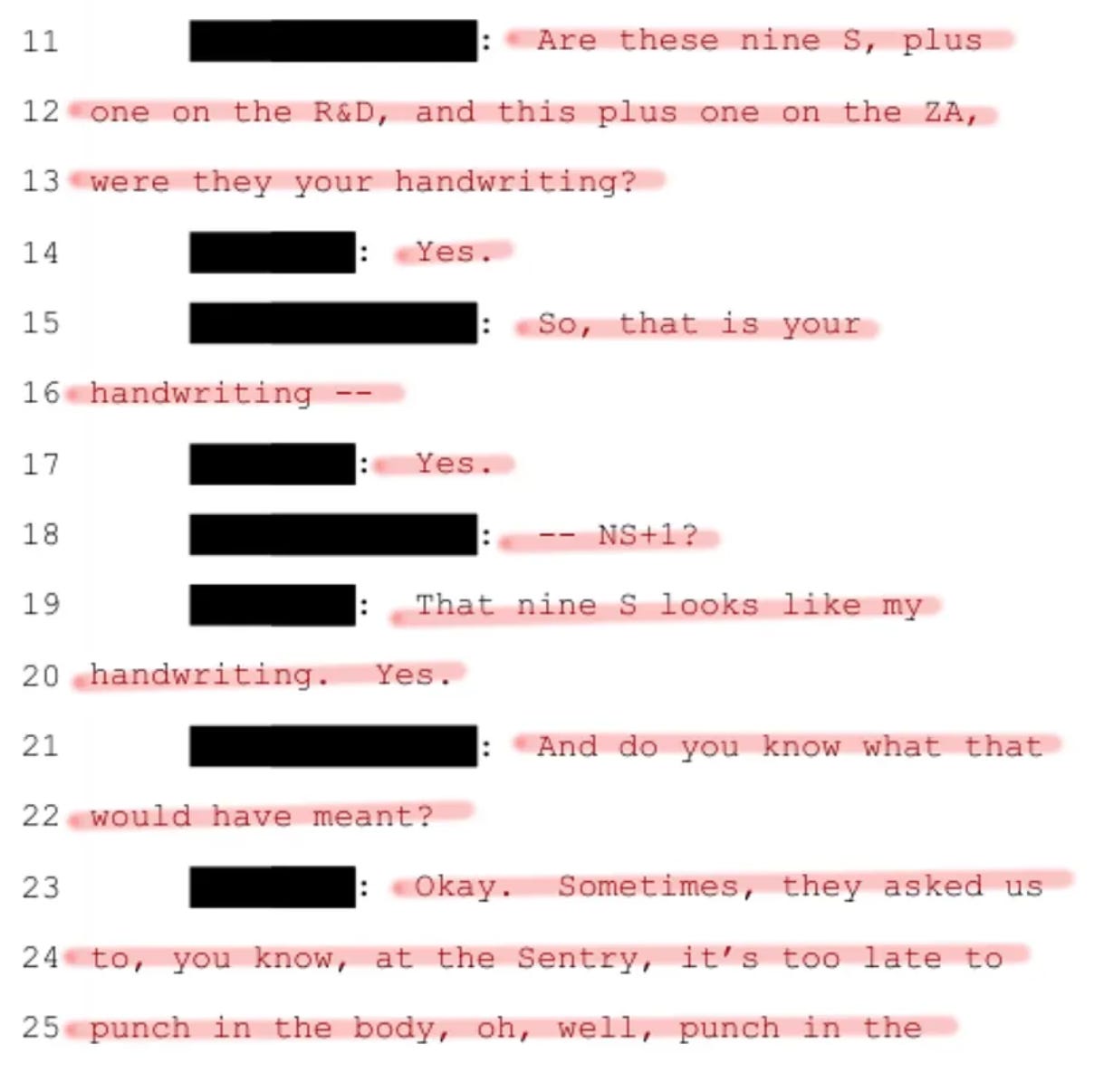
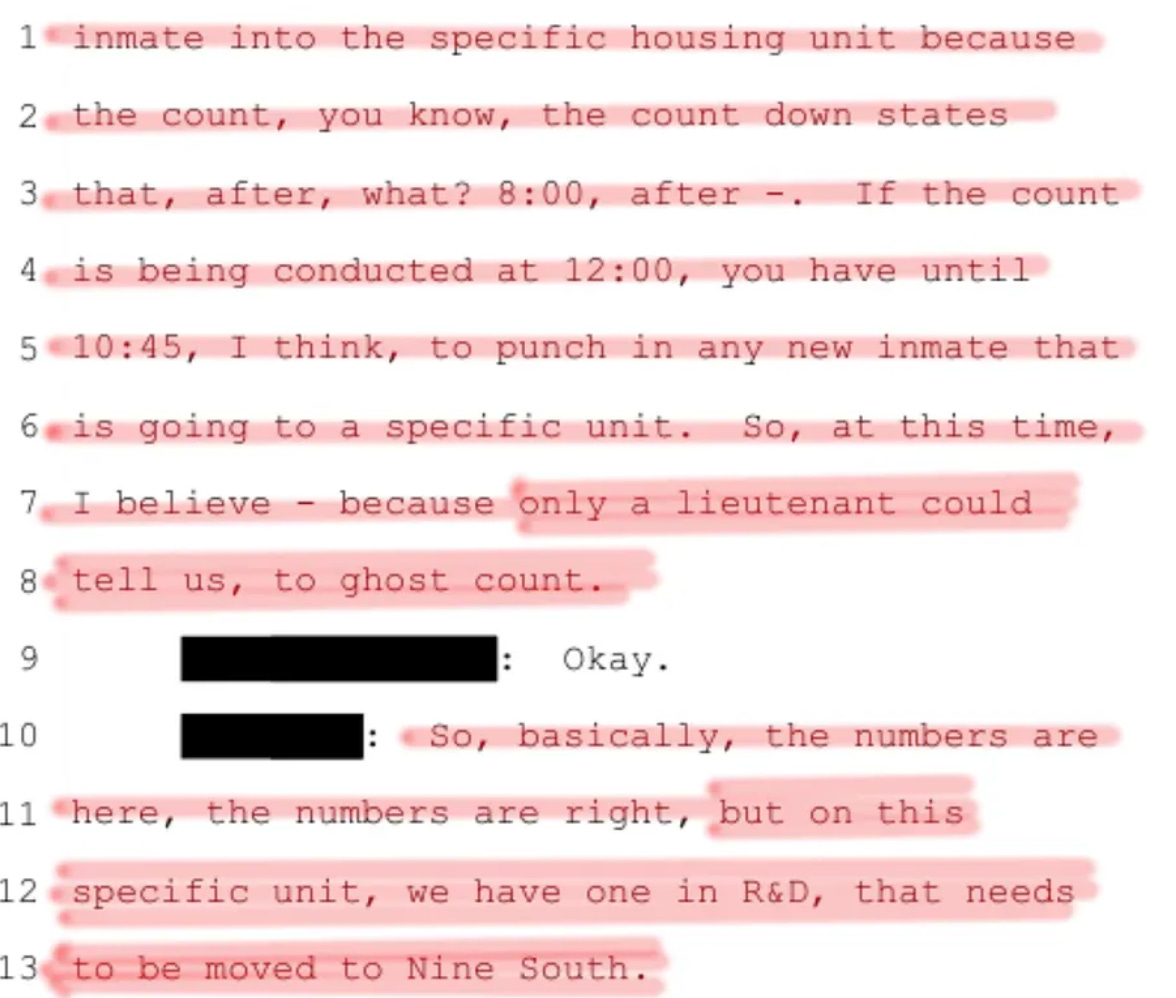
As I wrote in my other piece, an officer identified as Senior Officer Specialist 6 in the OIG report told investigators that he made the markings ‘9S+1’ to signify that an inmate had been ghost counted into the SHU with the expectation that that inmate would be returned to the SHU. Just like the other officers, he explains that ghost counted inmates are expected to be sent to the units they’re ghost counted into. He doesn’t go into details about why such an event would occur but he tells investigators he would only perform such a ghost count at the direction of a prison lieutenant.
The OIG referenced ghost counting six times in its report but did not provide the context for why a ghost count would be conducted nor explain how ghost counting worked.
The report discusses how Senior Officer Specialist 6 performed a ghost count on SHU (9 South) for an inmate who had been moved into Receiving and Discharge (R&D) earlier in the day. The text is a bit difficult to read, but for clarity what ‘ghost counting’ Inmate 4 means is that he was included in the SHU count to increase the count from 72 to 73. The next highlighted portion discusses how Senior Officer Specialist 6 meant to write ‘73 - 1’ instead of ‘73 + 1’. It should be noted that in his interview with the OIG Senior Officer Specialist 6 didn’t originally suggest he meant to write ‘73 - 1’. An investigator suggested maybe that was what he originally intended to write and Senior Officer Specialist 6 agreed as shown below.
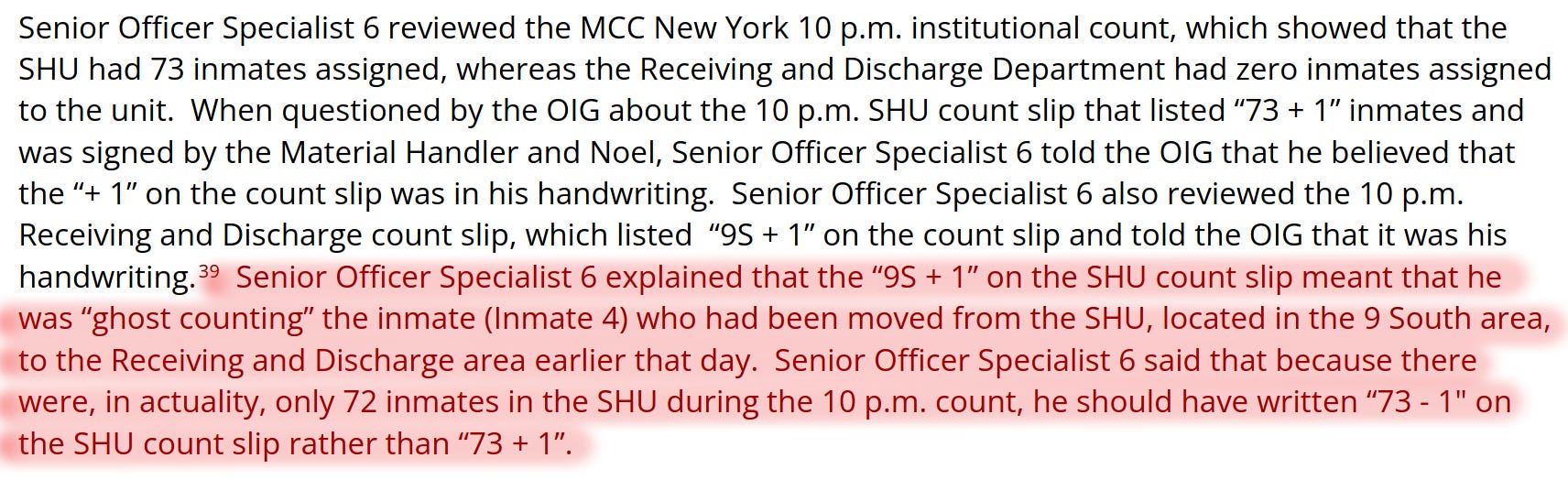
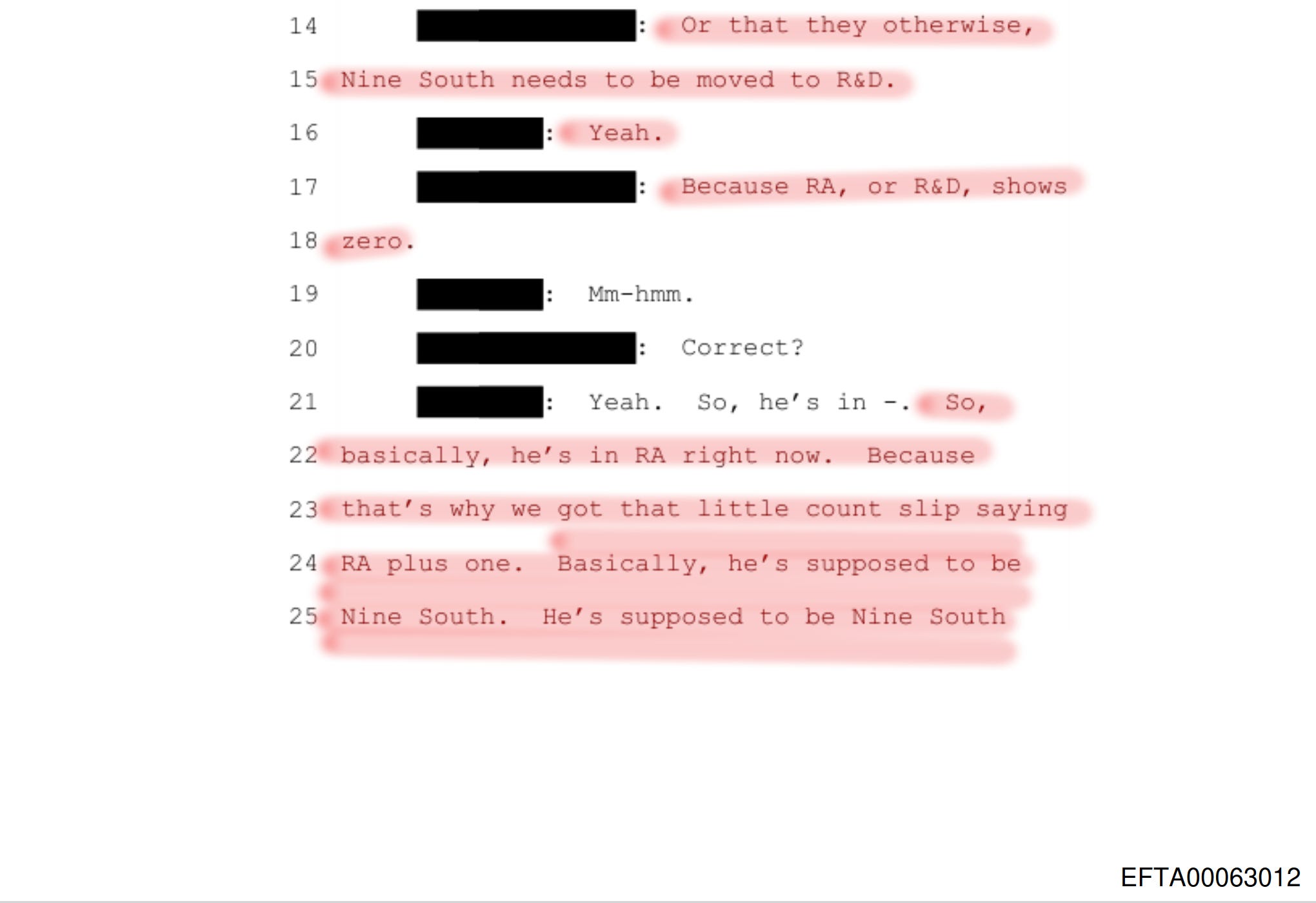
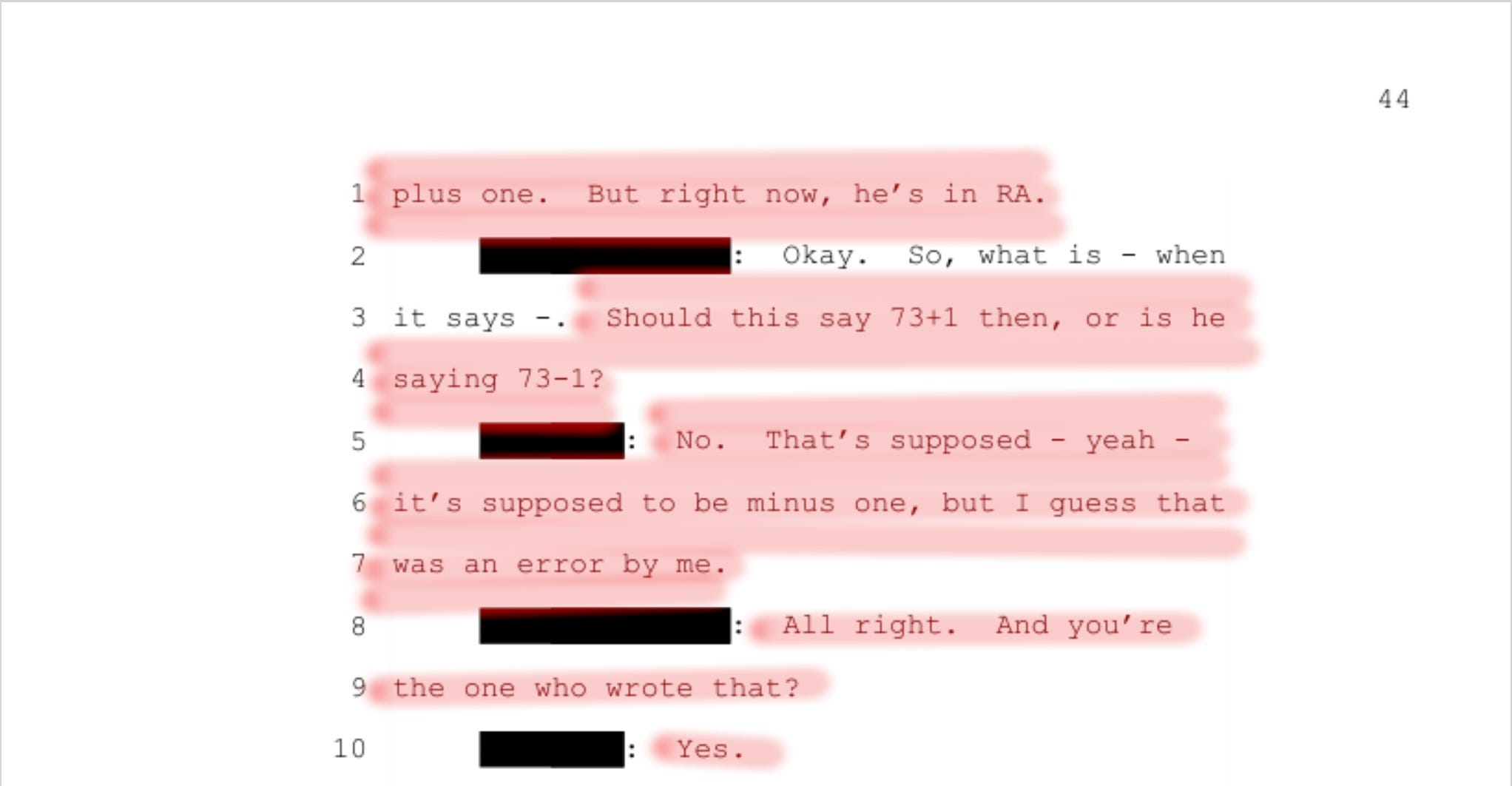
At first glance this seems sympathetic enough. There was an inmate that was relocated to another part of the prison at around 3:15 PM that day. This inmate was included in SHU counts from 4PM until midnight. 73 - 1 would give the correct count of 72.
However, in the next section of that same report Senior Officer Specialist 6 insists that ghost counting the inmate in R&D as if he was still in the SHU was done at the direction of the operations lieutenant. The operations lieutenant, referred to in the report as the Morning Watch Operations Lieutenant, adamantly denied this.
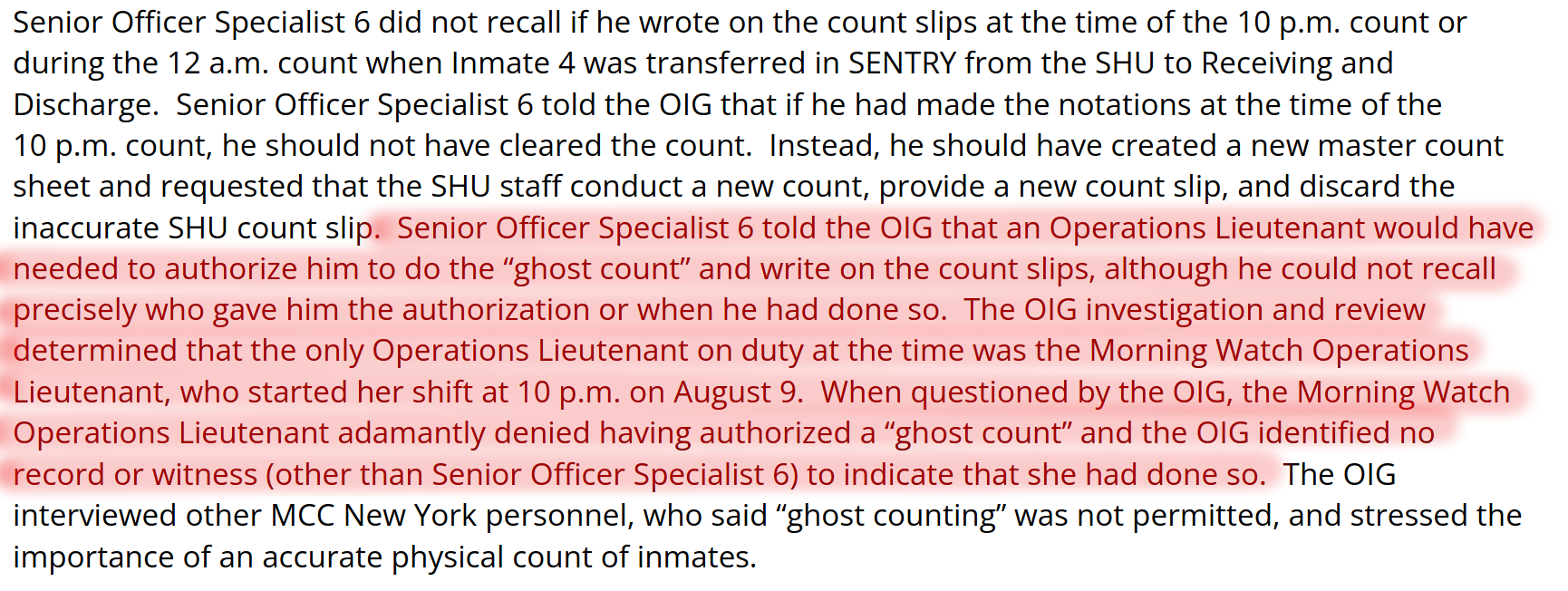
What is not mentioned in the OIG report is that the Morning Watch Operations Lieutenant stayed for almost four hours after she was relieved at 5:30 AM that morning.. About an hour before Epstein was found dead in his cell. The lieutenant’s logs from that evening showed suspicious changes to the count totals and she was the officer responsible dispersing those logs with a daily report.
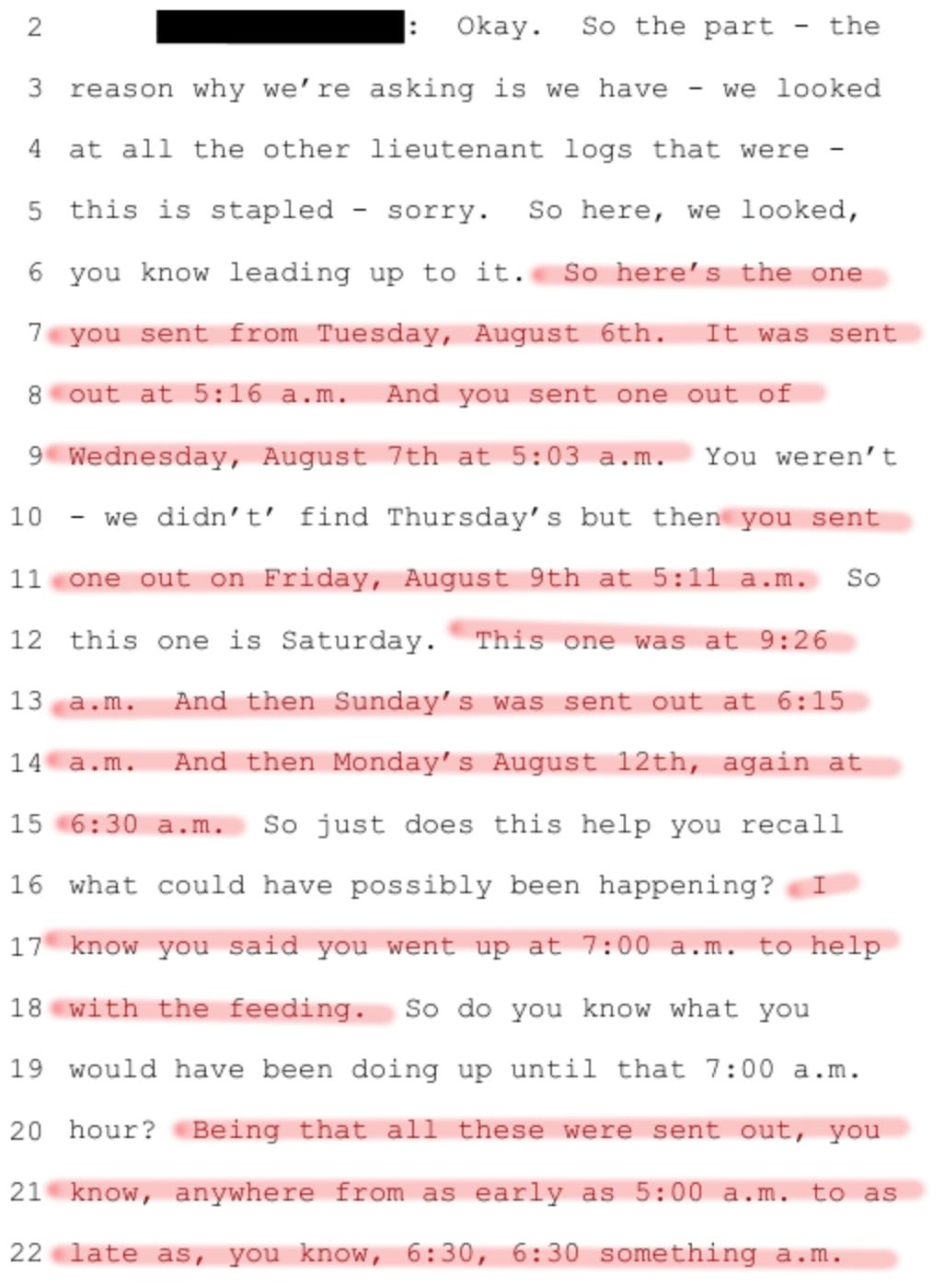
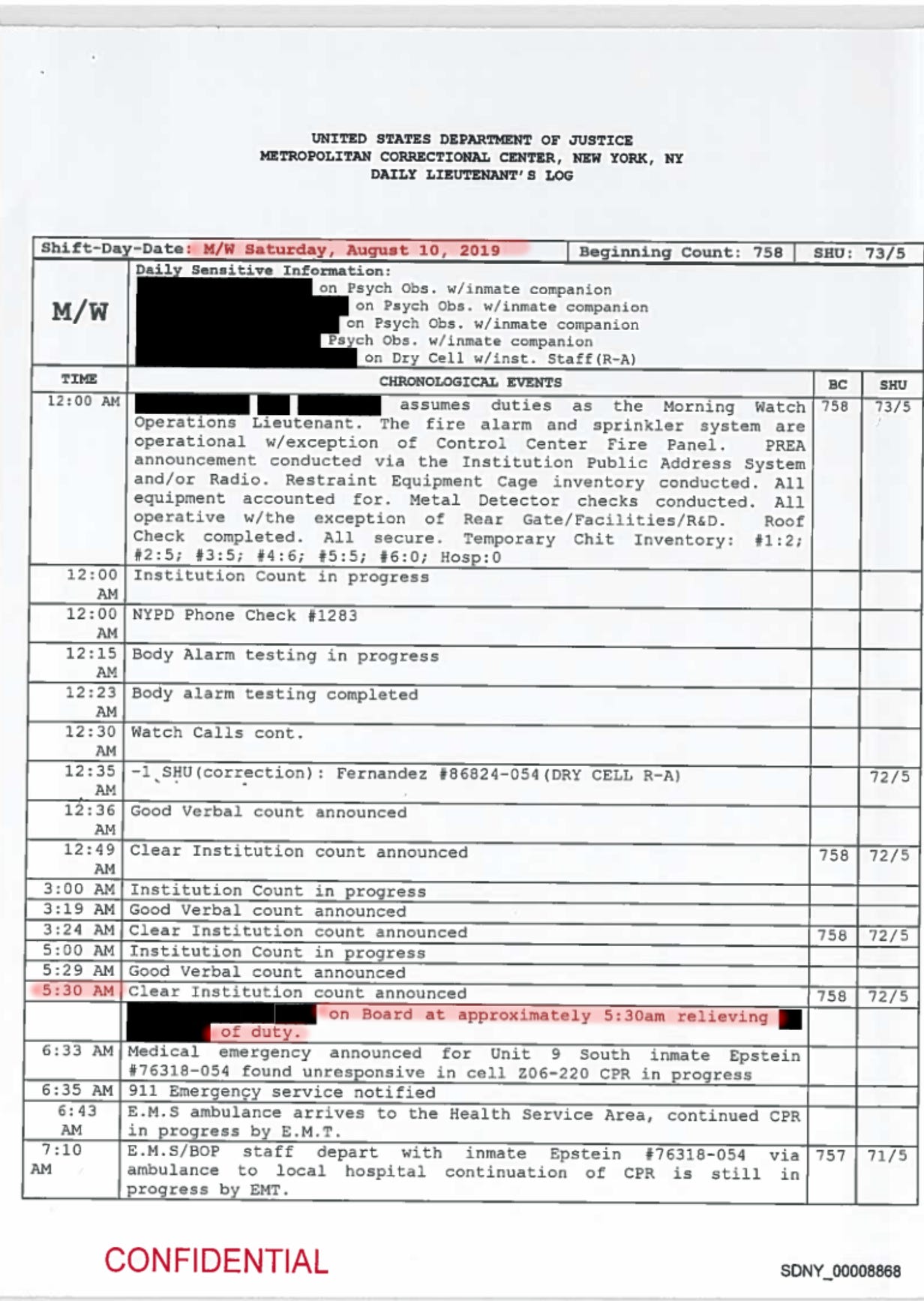
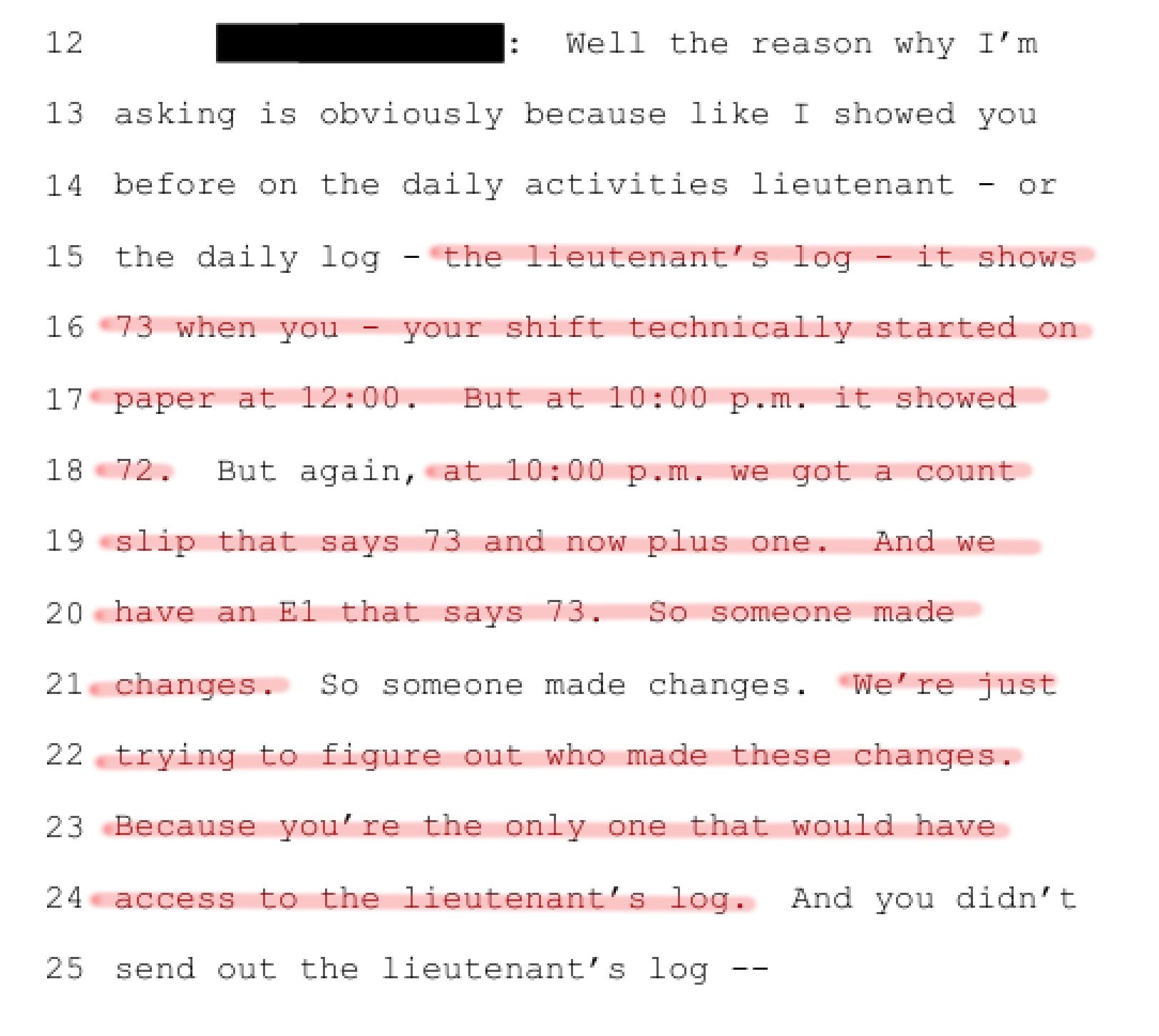
There’s another element not mentioned in the OIG report about the interview with Senior Officer Specialist 6. Throughout the interview agents probed Senior Officer Specialist 6 for evidence that Tova Noel had not done her 10PM count despite the fact she told agents that she had. Noel told investigators that the discrepancies from her count almost certainly involved a ‘ghost count’ where she did a proper count but someone from control called her to tell her to include an inmate that was not physically present.
When investigators asked Senior Officer Specialist 6 if the fact that Noel turned in a slip with an incorrect count that that was evidence she did not actually do her count he told investigators that it was not. He said it was possible for officers to turn in a count slip with an incorrect value because a supervisor might have told them to include an inmate in their count even if he wasn’t on the unit.
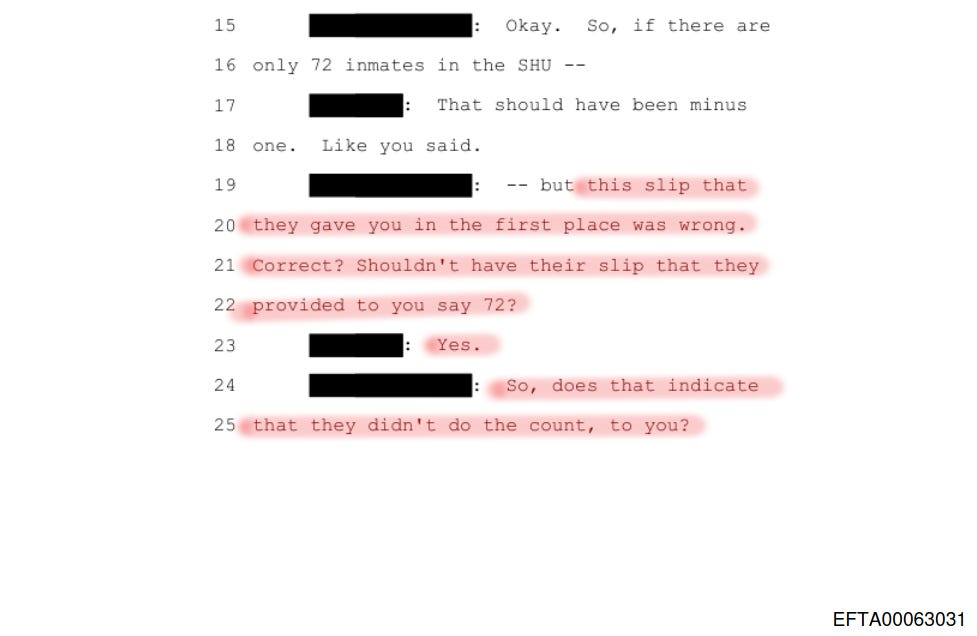
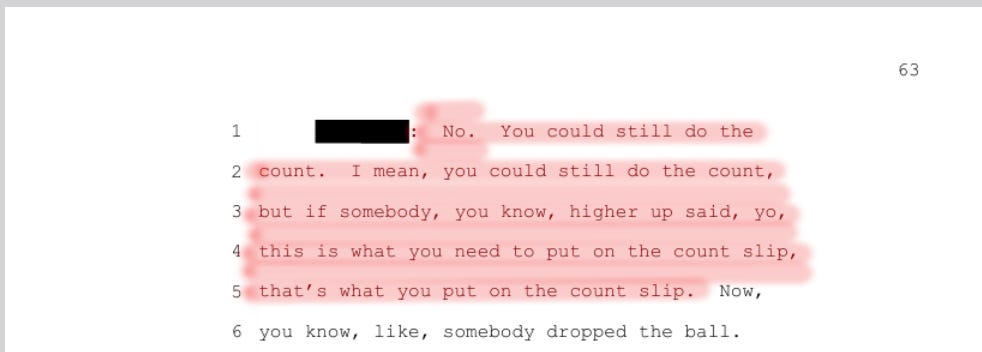
When the OIG pursued information about ghost counting in their September 2021 interview with the Morning Watch Operations Lieutenant they treated the inquiry as if it was solely a documentation error. There was minimal to no interest in ruling out that a supervisor in the prison had actually ordered a ghost count as Noel and Senior Officer Specialist 6 had suggested. Despite surveillance footage showing someone was in the unit and climbed the staircase towards Jeffrey Epstein’s cell they determined this line of inquiry was not important enough to rule out.
Instead, they spent their time trying to prove a theory that the incorrect counts were actually caught at 10PM by the Morning Watch Operations Lieutenant and she altered the lieutenant’s logs in an attempt to hide her mistakes.
There’s so much more to this story but I think it would be best to leave it here for now. Accepting the idea that references to ‘ghost counting’ are a proxy for bad bookkeeping and nothing more would be far easier to do if the OIG had invested more resources into ruling out alternative explanations. Instead, we’re left with a shoehorned suicide narrative replete with well meaning but incompetent staff, bad counts and bad management while omitting evidence of absurdly rampant corruption and other alarming pieces of information.
In her testimony to congress in June of 2026, Tova Noel disagreed with both the FBI and the OIG about the orange flash.
The only explanation she could come up with was a shrug and an affirmation it definitely wasn’t her.

When she says it wasn’t her, I believe her.
There will be more.